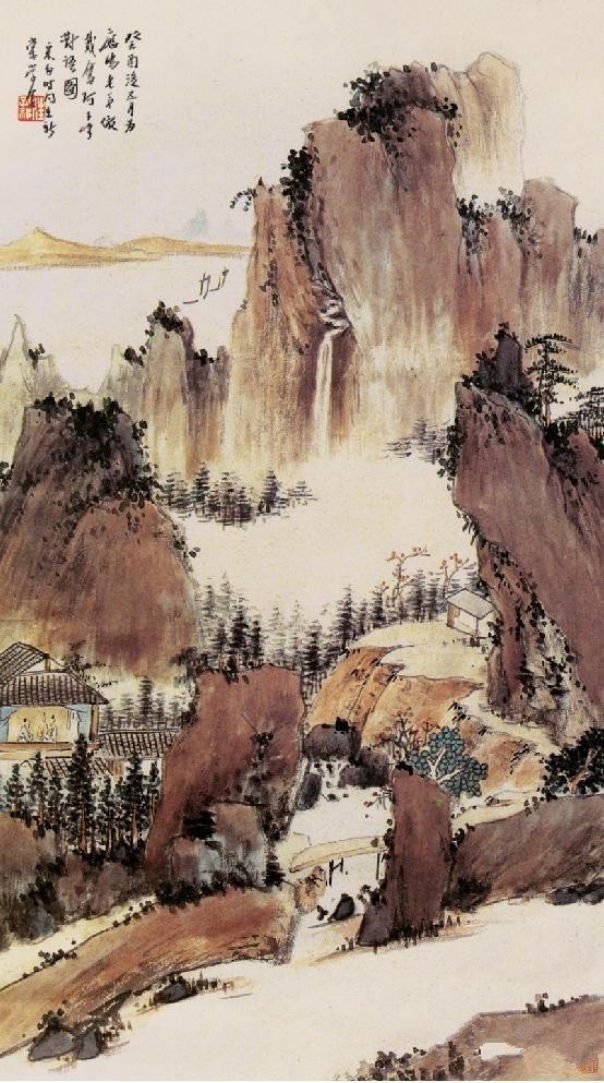
Wang Caibai, a graduate of the Drawing and Handicraft Department of Liangjiang Normal School in 1910, was a highly renowned landscape painter before the 1940s. A native of Xin'an, he was the founder of the Xin'an School of painting, Hongren (Jianjiang), the head of the "Four Monks" and also the head of the "Four Masters of Xin'an." Wang Caibai was considered the last great master of the Xin'an School. His landscape paintings were outstanding for his time. Wang Caibai was also known for his noble character and strong national integrity. Many literati of the time held him in high esteem.
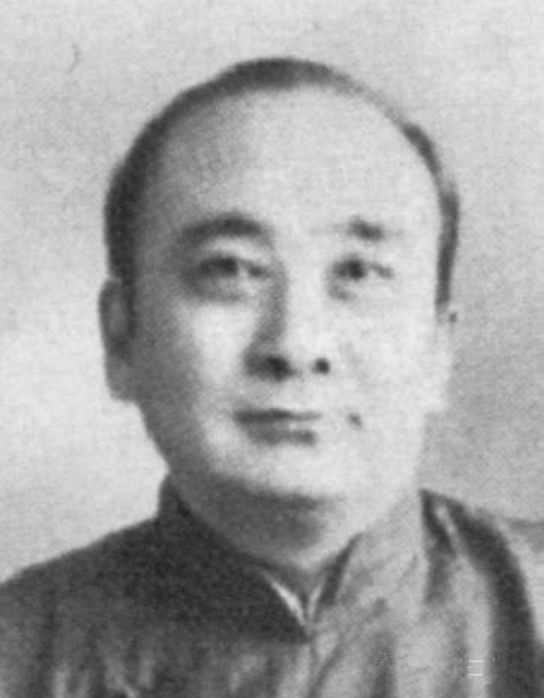
Wang Caibai (1887-1940), whose original name was Kong Qi, courtesy name Caibo, also known as Caibai, style name Dan'an, and pseudonym Xitong Jushi, often used both "Kong Qi" and "Xitong Jushi" when inscribing his paintings, but he was more commonly referred to by his courtesy name, so "Wang Caibai" was the more common name. Wang Caibai was born on August 2, 1887, in Xixi, Shexian County, Anhui Province. Shexian was an important town in ancient Xin'an, where commerce flourished and culture developed. Famous figures from the early Qing Dynasty, such as Hongren, and from the late Qing Dynasty and the Republic of China, such as Huang Binhong, were both from this area. The Wang family was also a prominent clan in Huizhou, known as "Nine out of ten surnames are Wang," and Wang Caibai was born into this prestigious family. His grandfather, Wang Zongyi, courtesy name Zhongyi, was a learned scholar with extensive writings, known as Mr. Taolu. Zheng Jiaqi from Anhui said that after becoming a Jinshi (a successful candidate in the highest imperial examinations), he resigned from his official post and went into seclusion. Others say that he became a student of Weng Tonghe in 1876 and passed the Jinshi examination in 1886. However, I have not been able to find any evidence to support this claim. In the *Index of the List of Jinshi inscriptions in the Ming and Qing Dynasties*, there are 329 Jinshi in the Gengchen year of the Guangxu reign (1880), but none of them are Wang Zongyi. However, "Wang Zongyi" appears among the 193rd in the third class, which may be a mistake.
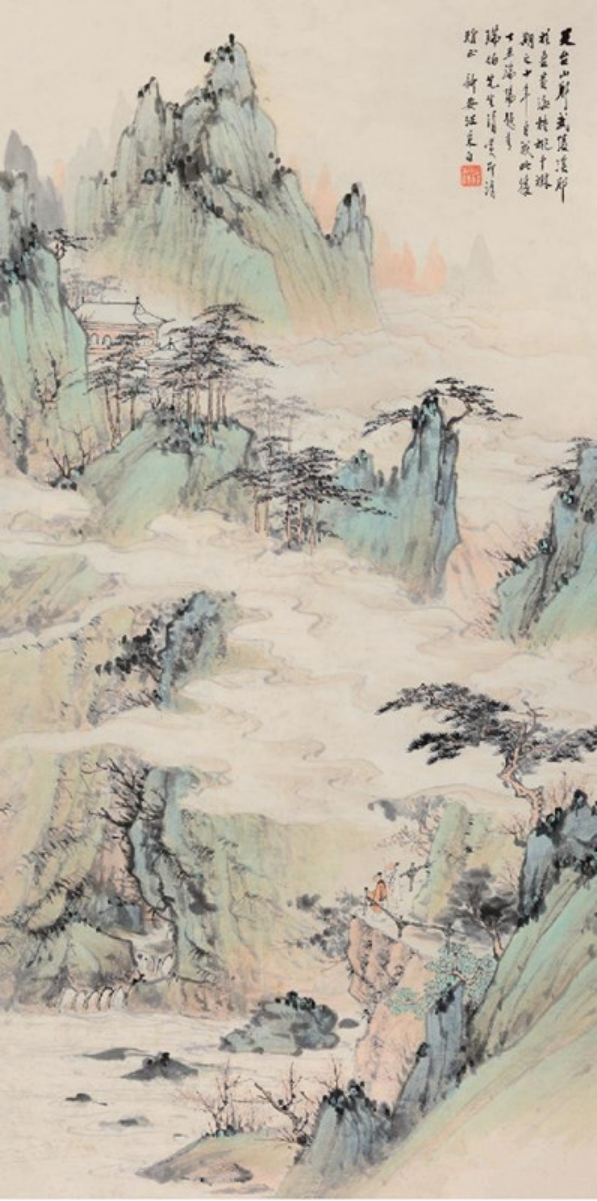
At the age of five, Wang Caibai became a student of Huang Binhong, a student of his grandfather, and studied the Four Books and Five Classics. In 1906, at the age of 20, Wang Caibai entered a church school (Chongyi School) in Shexian County. The following year, he went to Nanjing and expressed his ambition to save the country to his second uncle. His uncle, Wang Juyou, planned to introduce him to the relatively progressive Anqing Army Primary School so that he could engage in military work and serve the country in the future. However, due to Xu Xilin's assassination of Enming, the secret revolutionary group "Huang Society" organized by Xin'an Middle School in Shexian County, and Huang Binhong's illegal minting of copper coins for the Tongmenghui, Wang Caibai was unable to go to Anqing and stayed in Nanjing. He also wanted to go to Japan to study medicine like his third uncle, but he was unable to do so either time. Wang Caibai first entered the Mining School in Nanjing. Because Li Ruiqing was a close friend of Wang Juyou and then the principal of Liangjiang Normal School, who established the first drawing and handicraft department in 1907 and hired Wang Juyou as a teacher, Wang Caibai was brought to the Liangjiang Normal School in Nanjing to study drawing and handicrafts. Other students who enrolled that year included Lü Fengzi. Although Lü Fengzi was Wang Caibai's classmate, she graduated in December 1909. Lü Fengzi was the top student in her class and, according to regulations, could go to Beijing for a second examination to obtain the title of Juren (a successful candidate in the provincial-level imperial examinations), but she had no interest in officialdom and declined. Wang Caibai graduated in 1910 (Gengxu year). Also graduating that year was Cao Yuqi, courtesy name Zhiyuan, a descendant of the famous ink maker Cao Sugong and Wang Juyou's son-in-law. Wang Caibai, as the top student, went to Beijing for a second examination at the Ministry of Education and obtained the title of Juren.